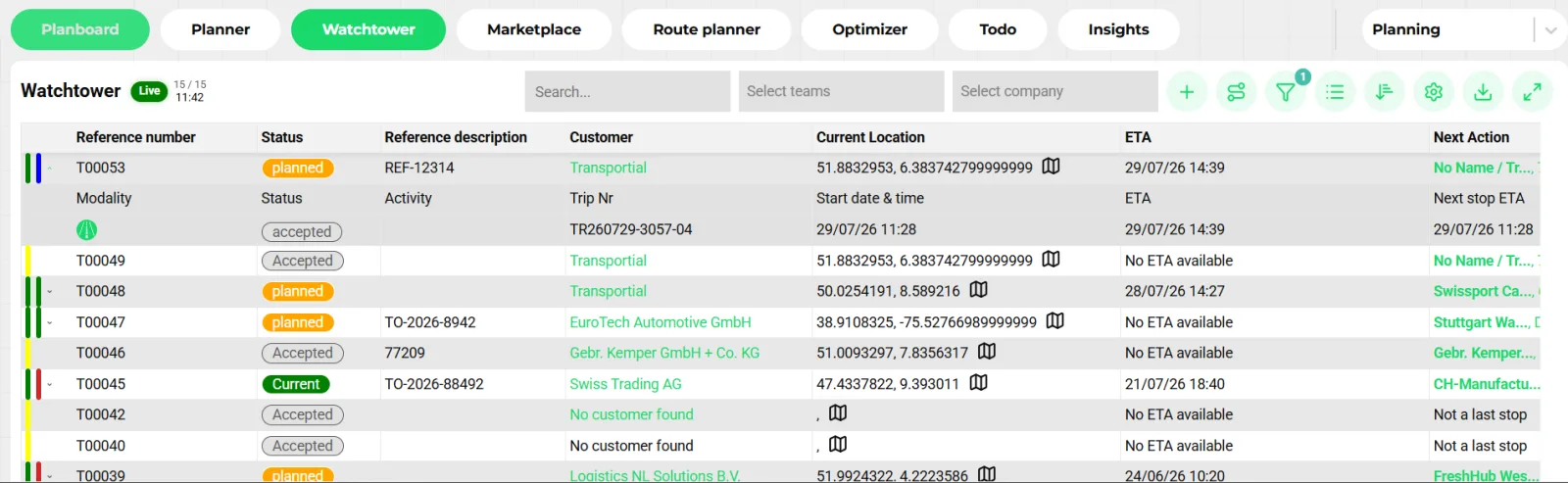
Once a truck leaves your facility, you are dependent on phone calls and carrier portals for updates, if you can even get through.
Manual shipment booking
Booking shipments means emails, phone calls, and manual entry into multiple systems. Time wasted on every single order.
Customer delivery complaints
Your customers do not know when their delivery will arrive. They call you. You call the carrier. Everyone waits.
ERP and WMS data silos
Shipping data lives in your carrier system, not yours. Reconciling invoices, delivery confirmations, and PODs is manual and error-prone.
How Transportial Helps
Your shipments, always in view
Real-Time Shipment Tracking
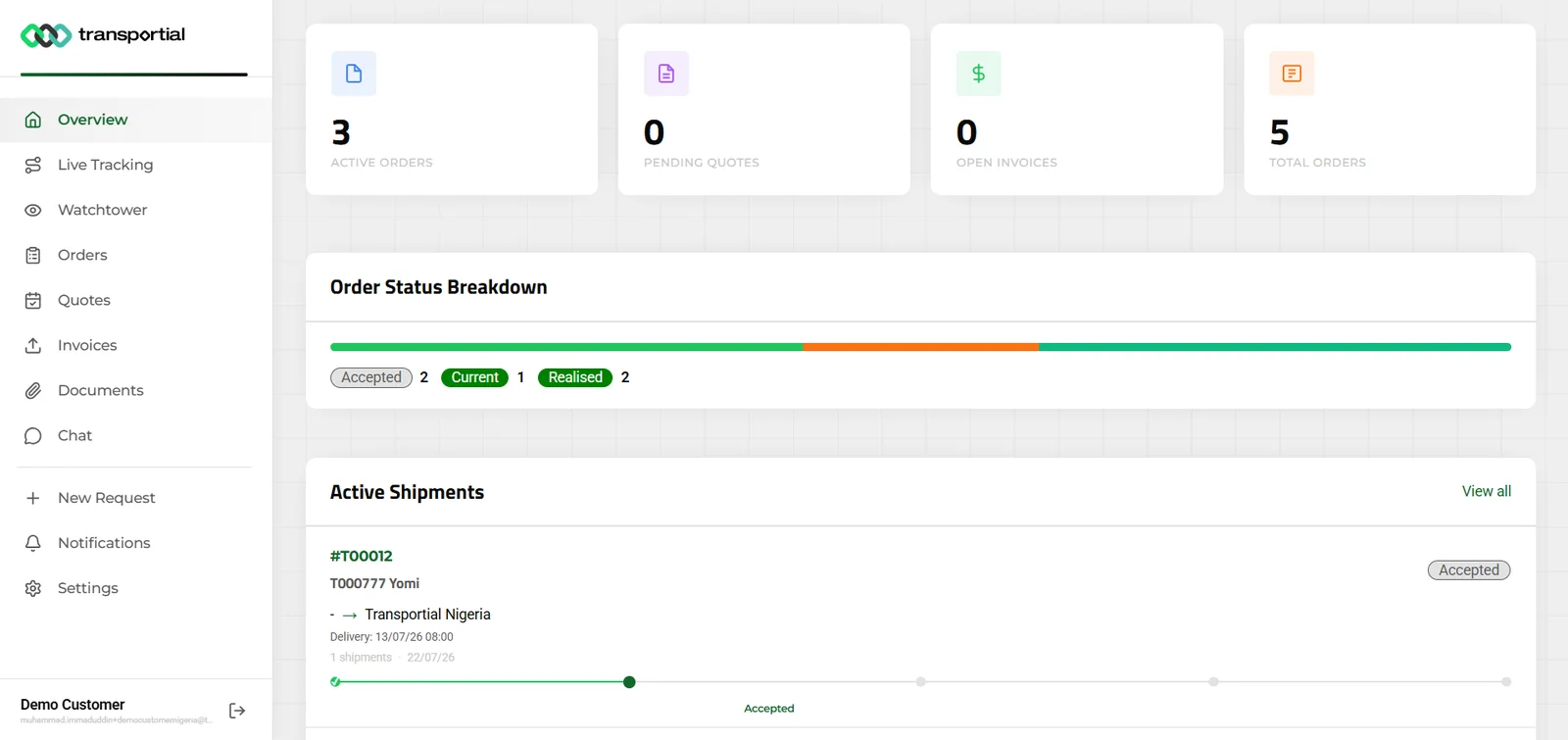
Live GPS tracking and IoT telemetry for every active shipment. Know exactly where every load is, updated every minute.
Customer Tracking Portal
Give your customers a branded portal with live tracking links, delivery status, and document access. No account required on their end.
ERP & WMS Integration
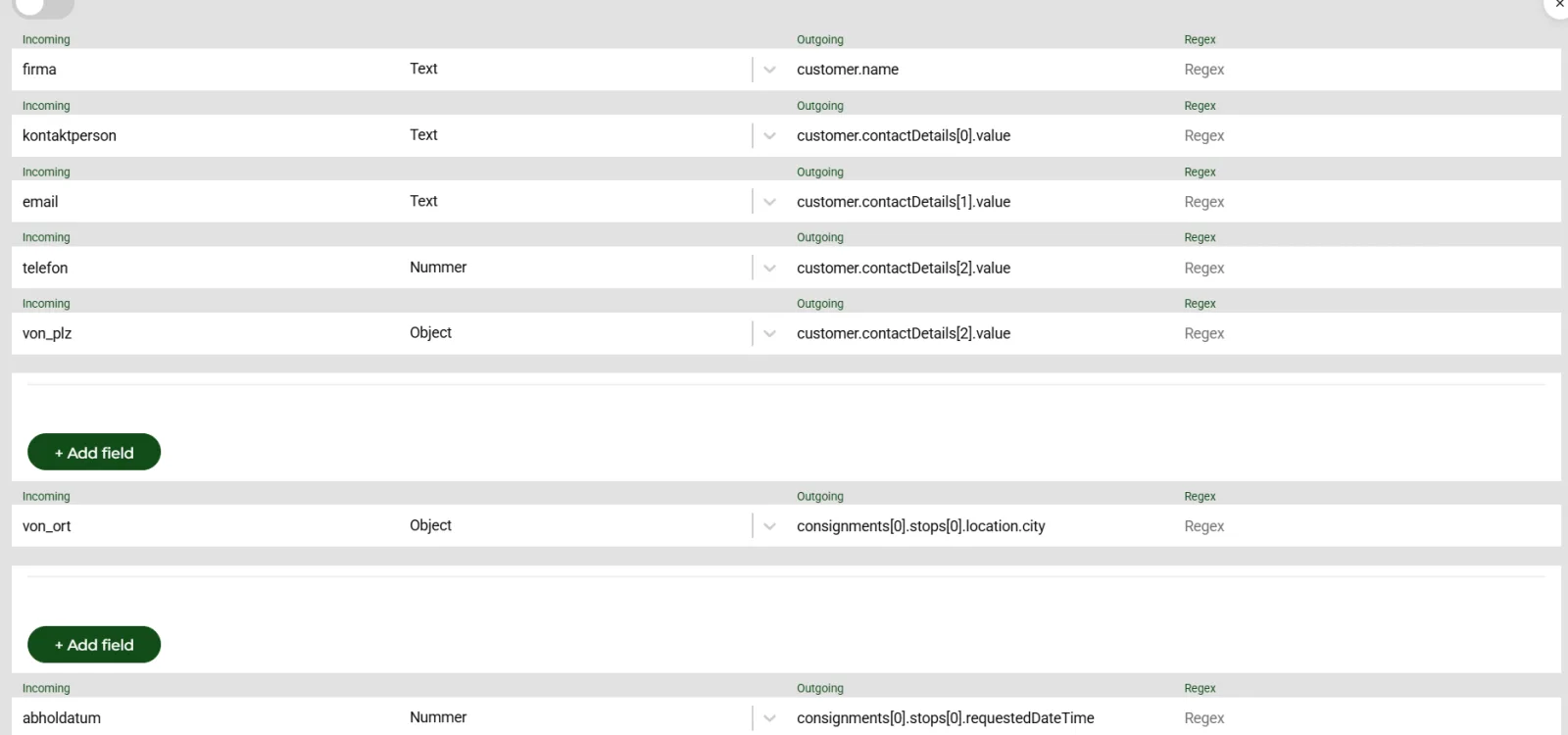
Connect Transportial to your ERP via REST API, FTP, or EDI. Transport orders flow in automatically, and delivery confirmations flow back.
Automated Delivery Notifications
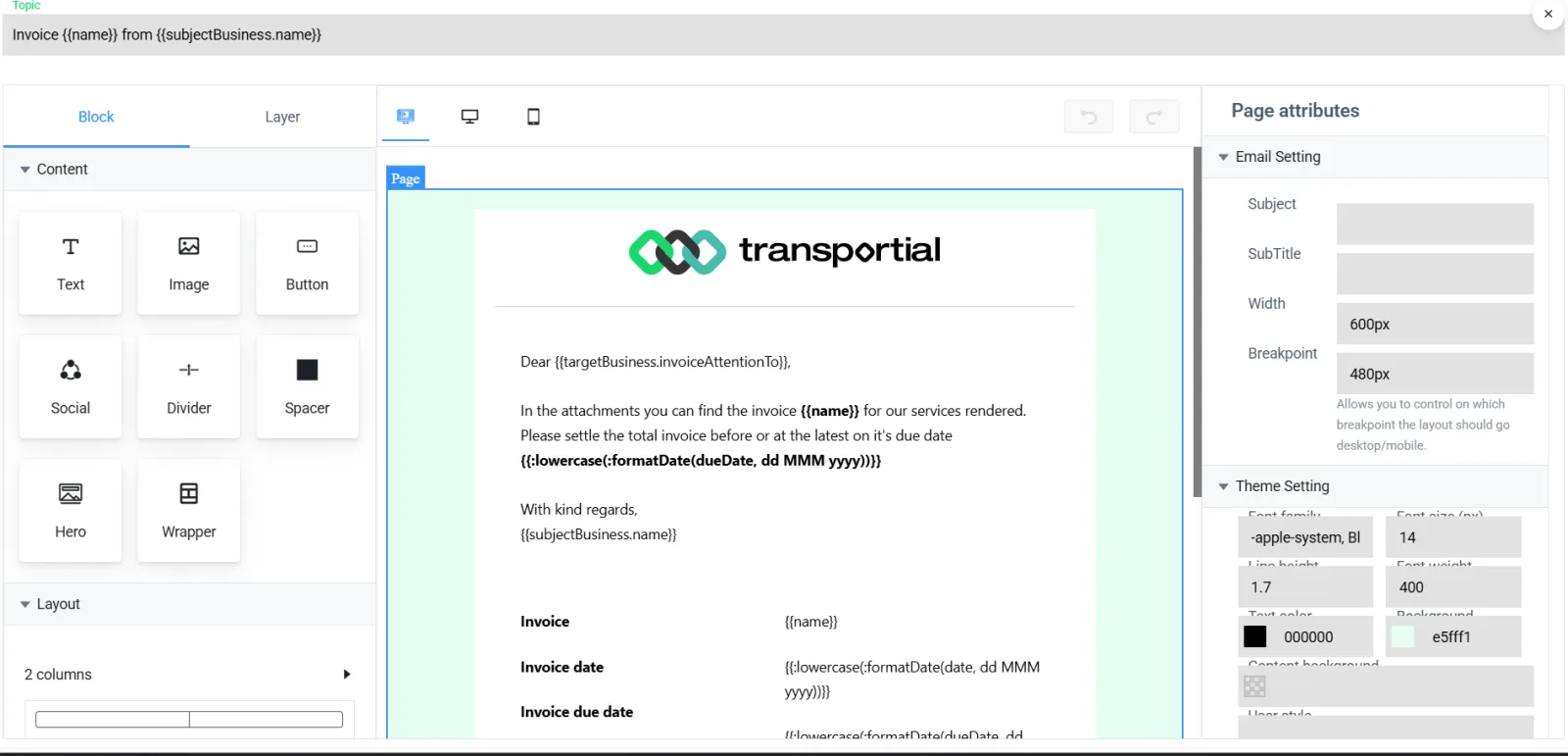
Trigger-based SMS, email, and WhatsApp notifications for your customers at every delivery event: dispatched, in transit, delivered.
Digital Transport Documents
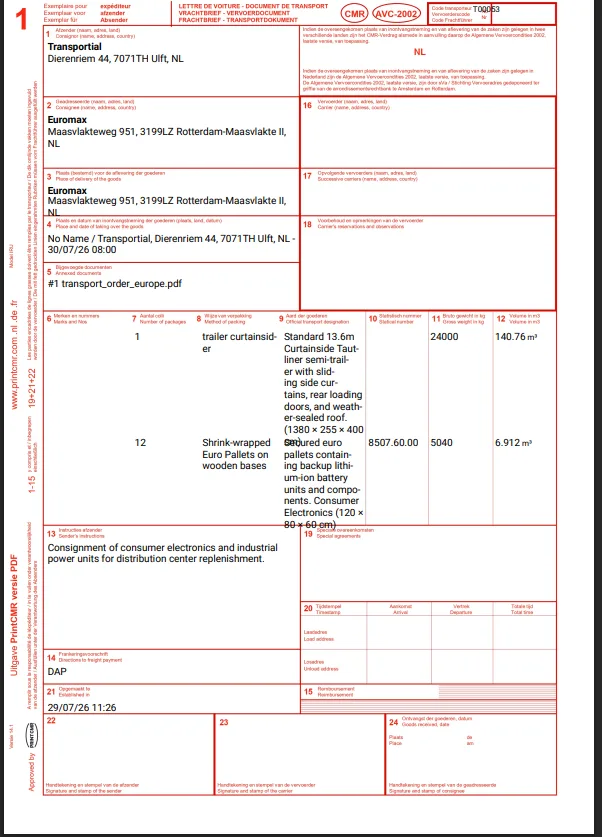
CMR waybills, delivery notes, and PODs generated and stored automatically. Always available, always linked to the right order.
CSRD & CO₂ Reporting
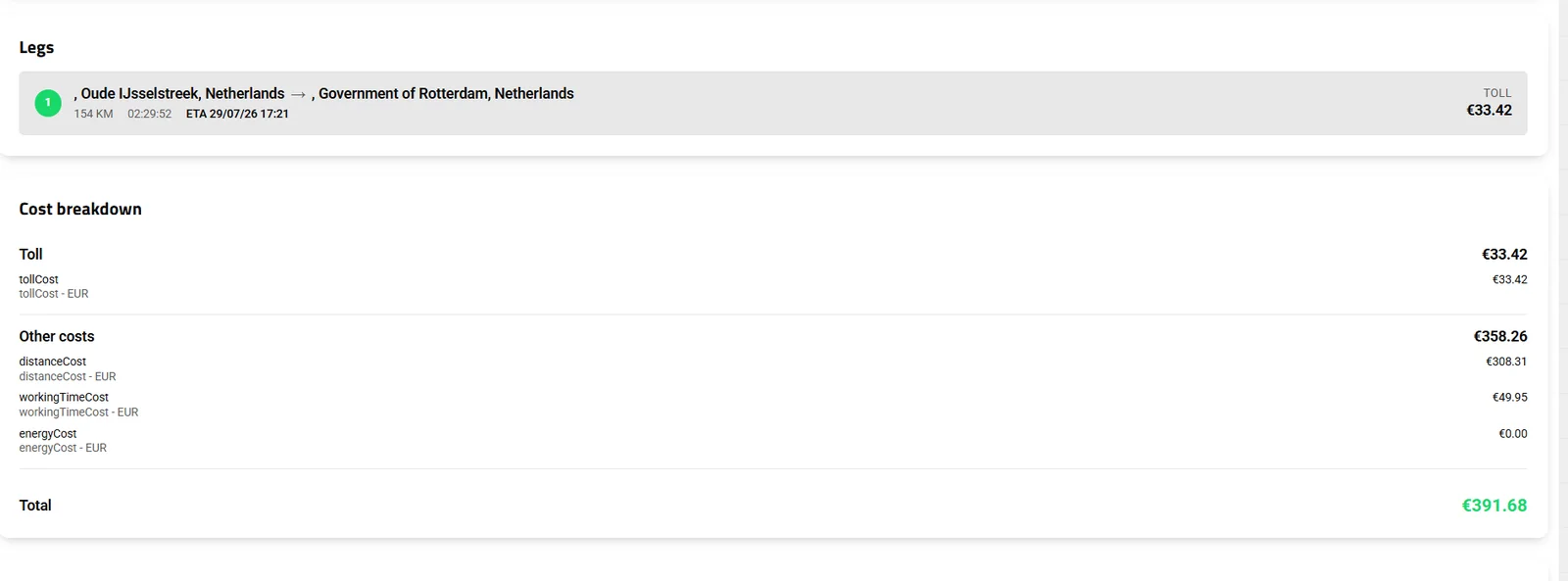
Automated CO₂ emissions tracking per shipment and lane for CSRD compliance and sustainability KPIs. No manual calculation.
No login
needed for tracking links
Live
ETA updates
Auto
delivery notifications
CSRD
CO₂ reporting
Why would a shipper use a TMS?
A shipper uses a TMS to book transport, see where every load is after it leaves the dock and keep delivery documents and carrier invoices tied to its own orders. Transportial connects to a shipper's ERP, shows live positions and ETAs per shipment and sends customers delivery updates automatically.
Manufacturers and wholesalers often lose sight of their goods once the truck leaves the loading dock: the carrier has the data, the shipper has the phone. A transportation management system brings that information back into the shipper's own process. In Transportial, transport orders flow in from the ERP through the REST API, EDI or FTP, so nobody types an order twice, and delivery confirmations, proofs of delivery and documents flow back against the same order. Live GPS positions and ETAs show which loads are on time, and configurable alerts flag the ones that are not. The shipper's own customers can receive automated updates by email, SMS or WhatsApp and a tracking link that needs no login. CMRs, delivery notes and proofs of delivery are stored on the order, which makes carrier invoices easier to check, and CO₂ emissions per shipment and lane feed sustainability reporting.
Can a TMS connect to a shipper's ERP?
Yes. Transportial connects to ERP and warehouse systems through a documented REST API with webhooks, EDI file parsing and an embedded FTP server, so transport orders arrive automatically from the shipper's ERP and status updates, proofs of delivery and documents go back to it without manual entry.
Integration decides whether a TMS saves a shipper work or adds another screen. Transportial exposes its transport orders, shipments, stops and events through a REST API documented with OpenAPI, and sends webhooks when business events happen, so an ERP or WMS can create orders and receive status changes in near real time. Shippers whose systems export files rather than call APIs can use EDI parsing or the embedded FTP server, which picks up order files and turns them into transport orders. Orders follow the OTM5 open standard, so carriers and platforms that already use OTM5 can exchange data without a custom mapping. Ready-made connectors cover accounting software, telematics and messaging, and an App Store extends the user interface. Once connected, the shipper's ERP remains the system for sales and finance, while Transportial handles the transport itself: booking, tracking, documents and the delivery confirmation that closes the order.
Take control of your outbound logistics
Start free with full platform access. No credit card required.