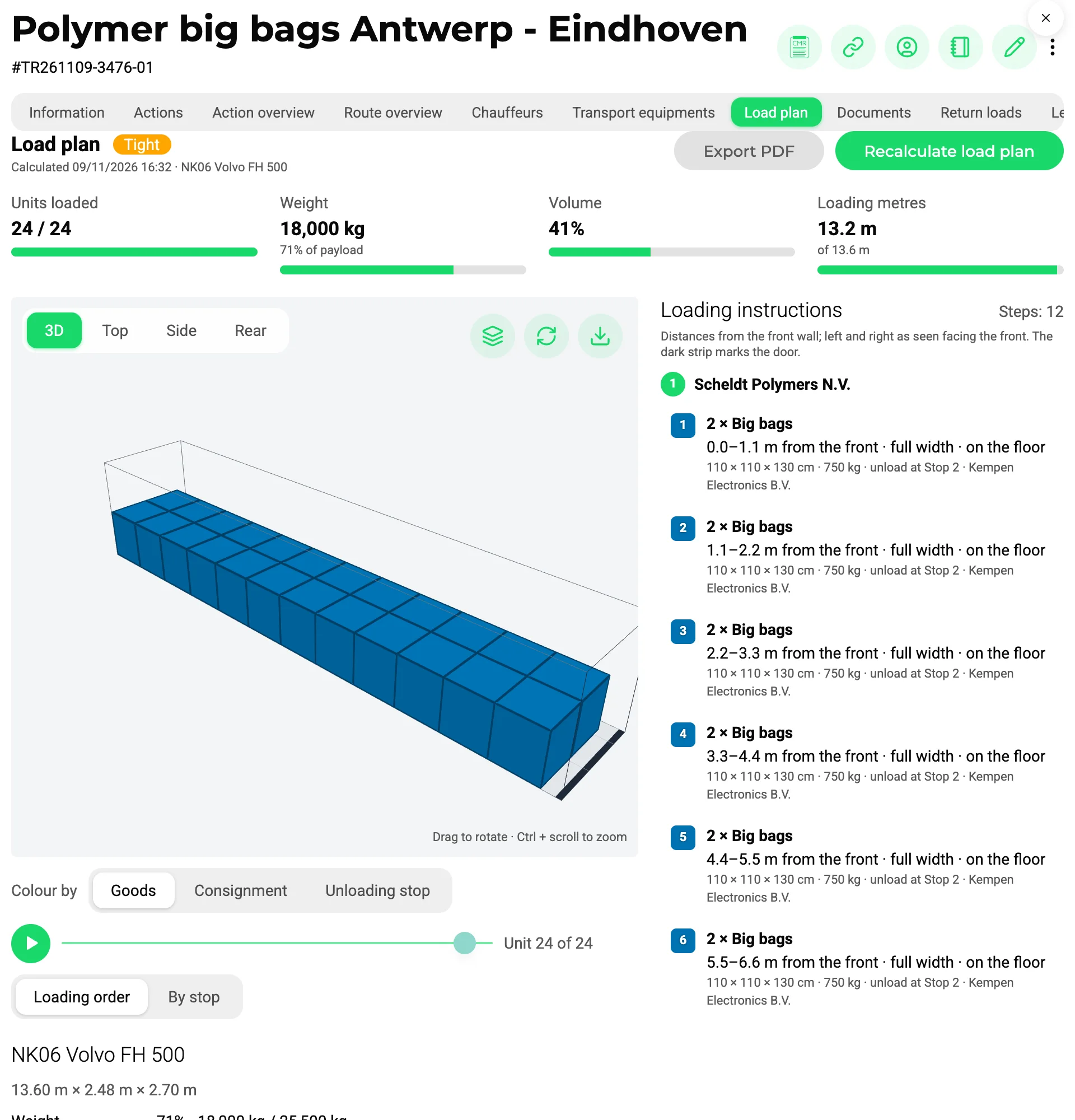
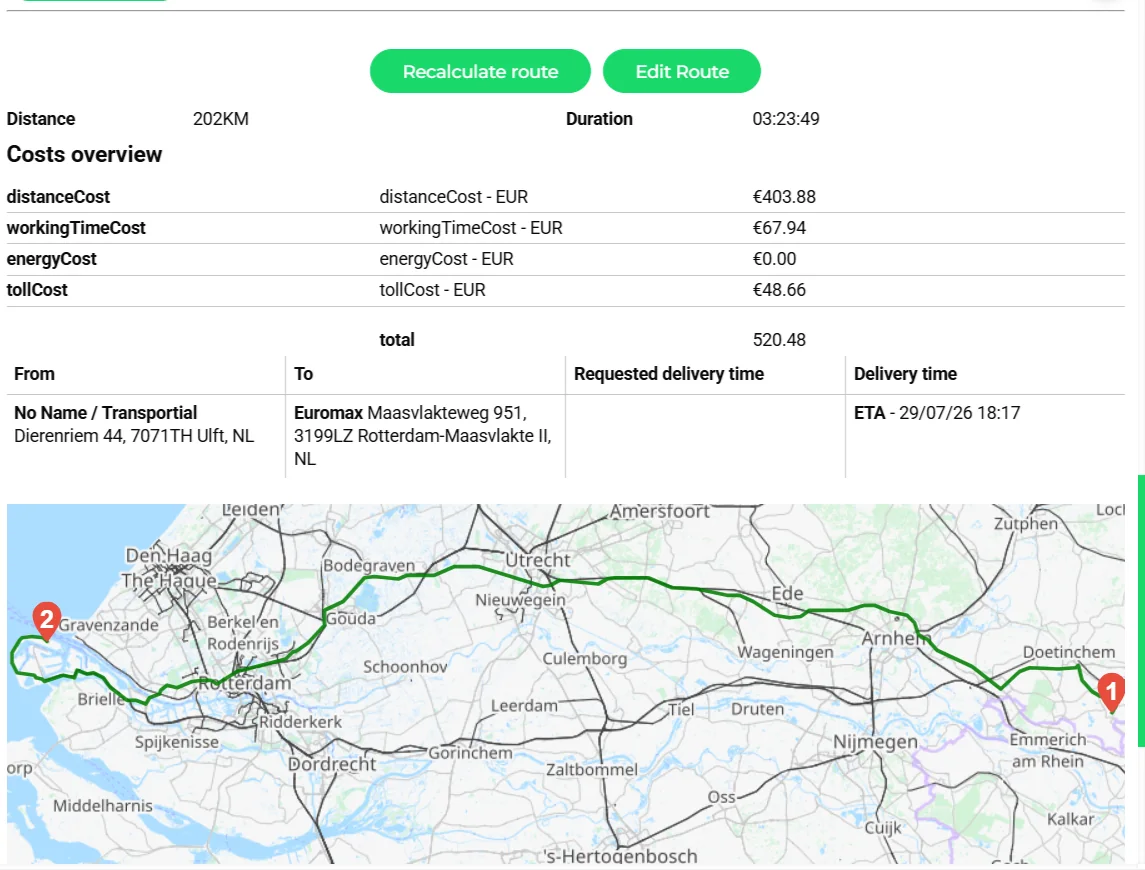
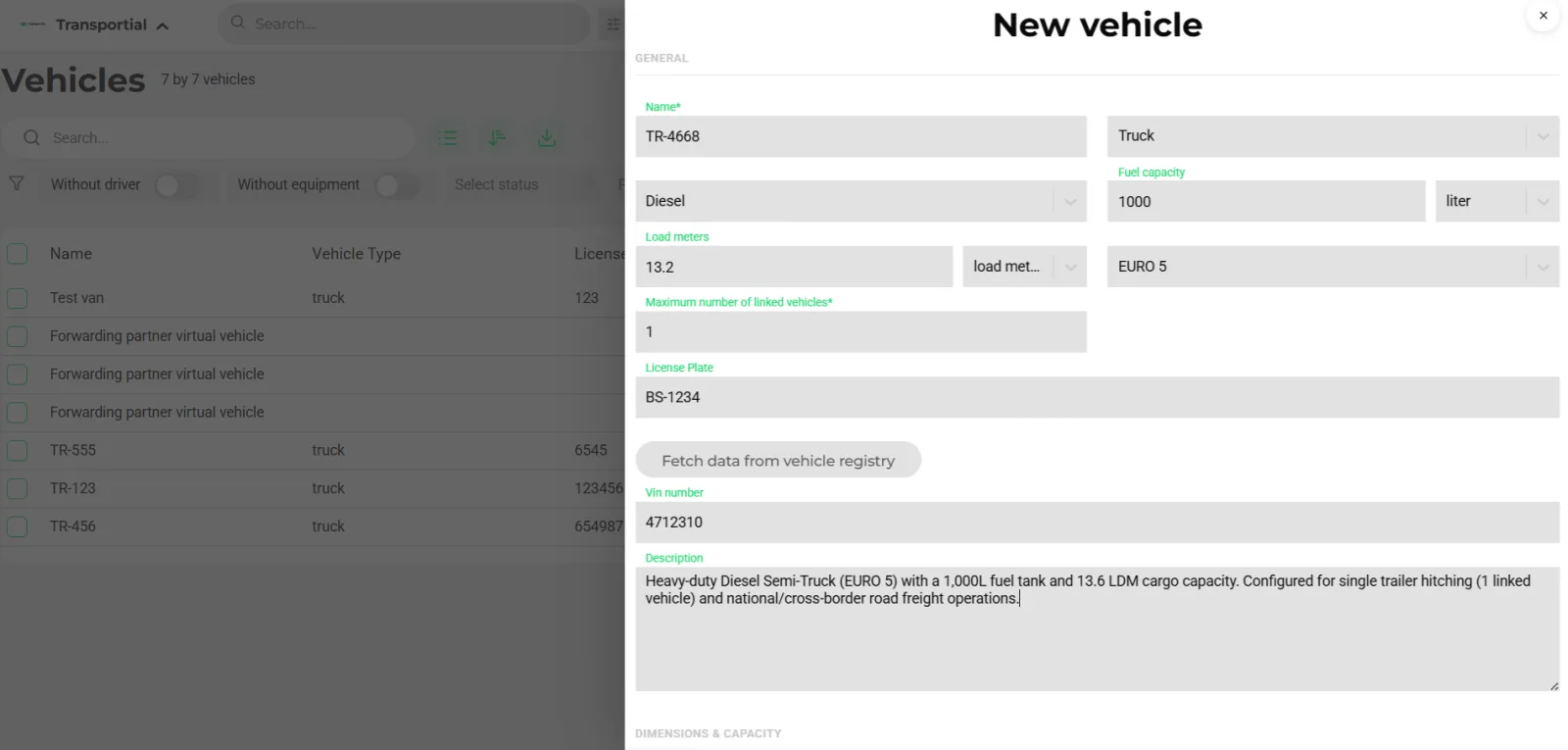
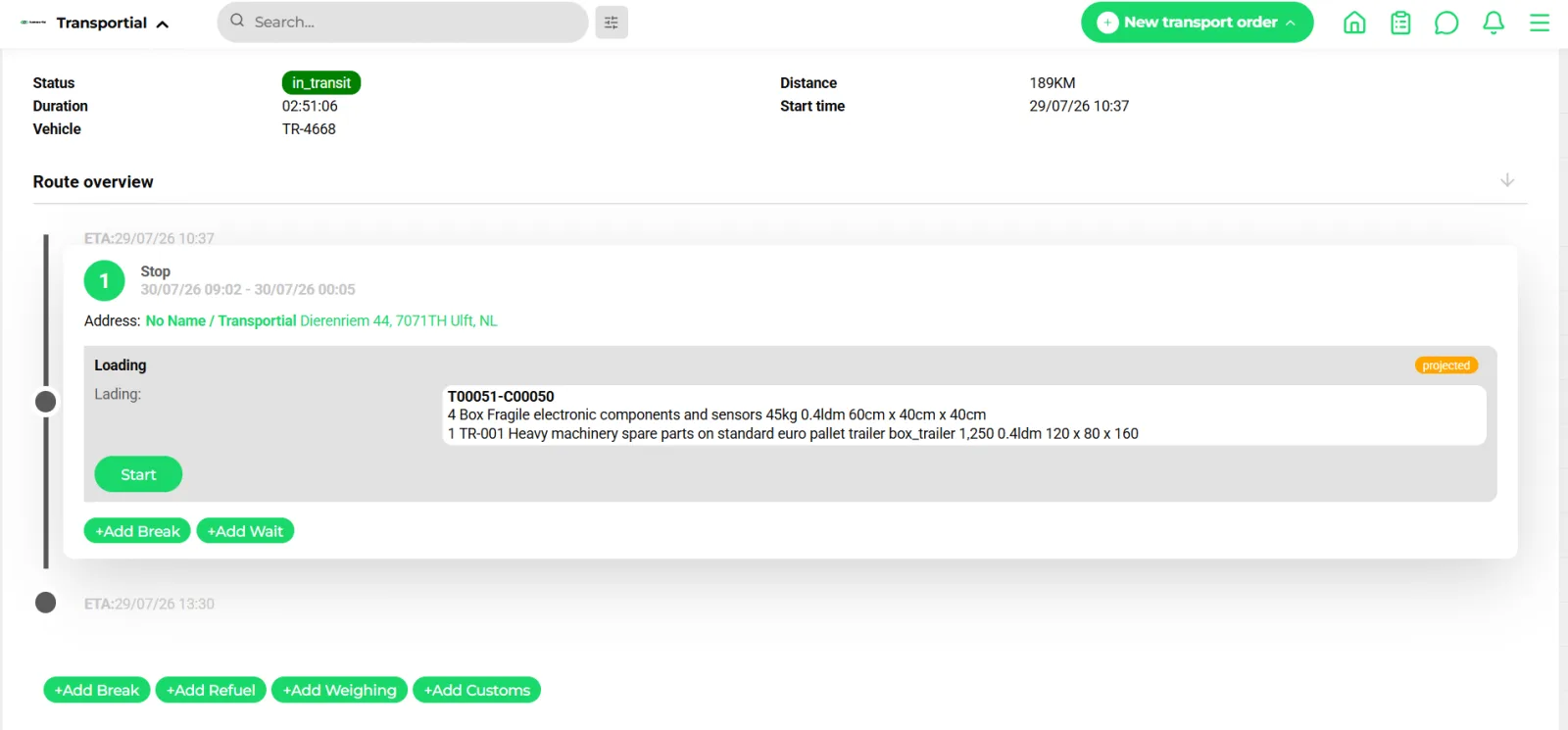
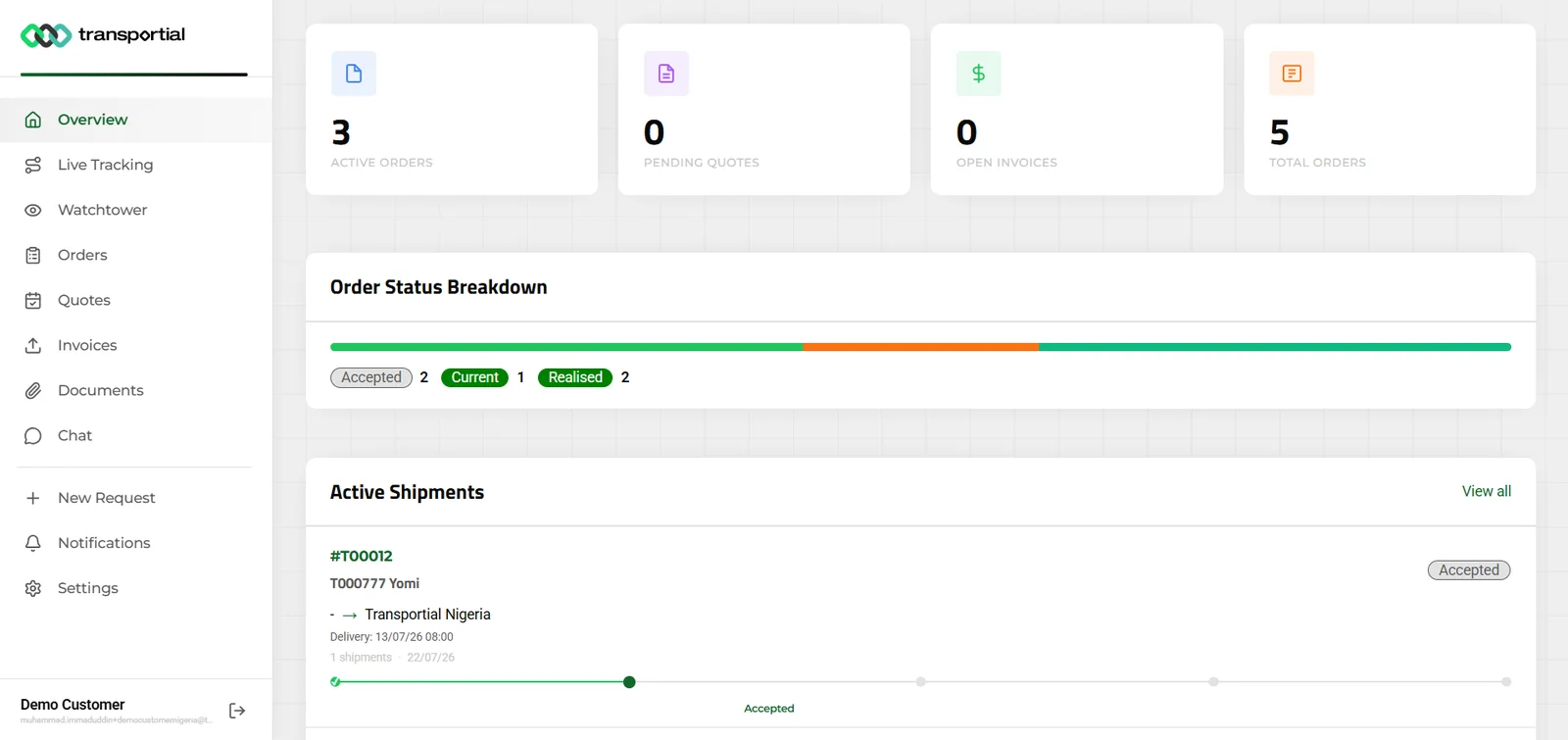
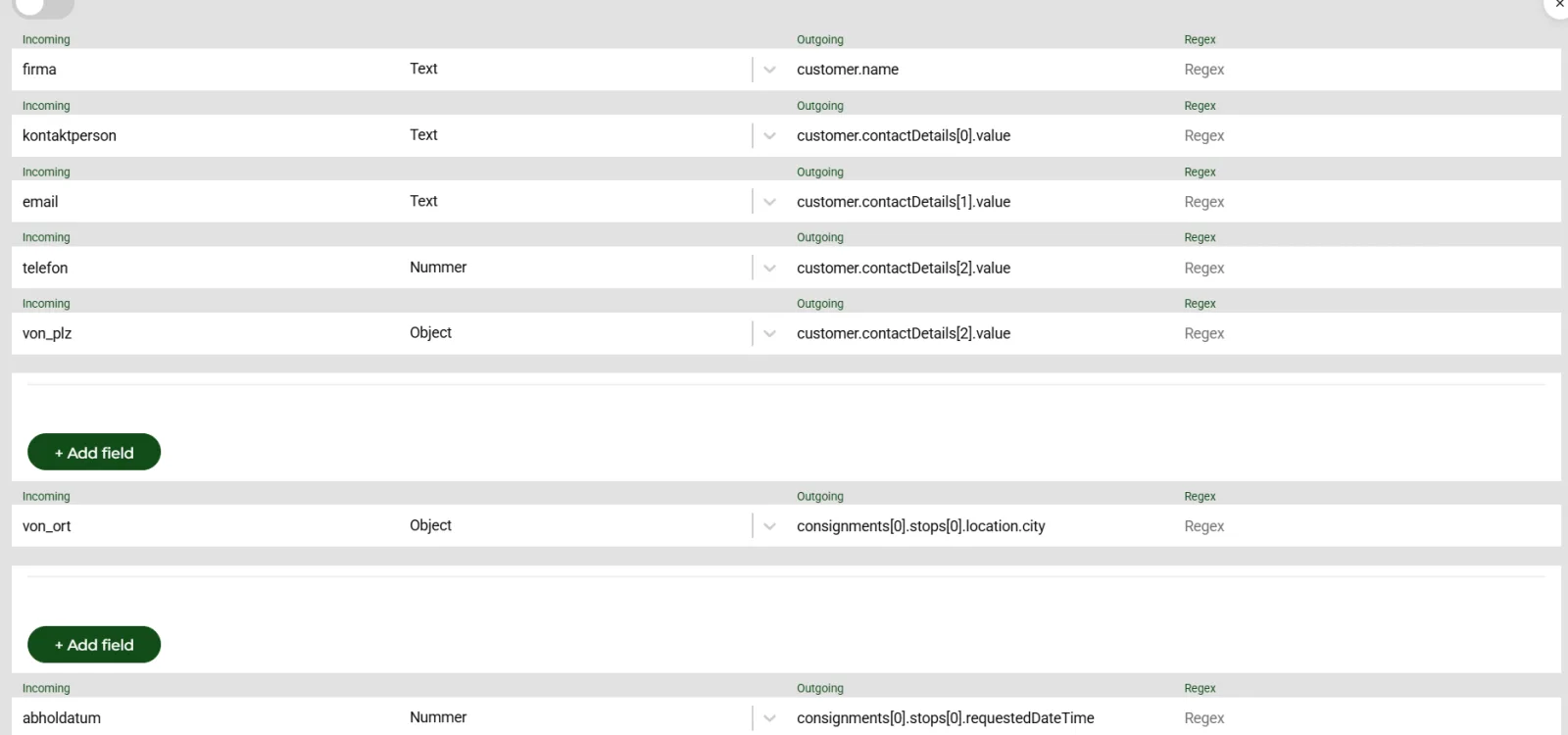
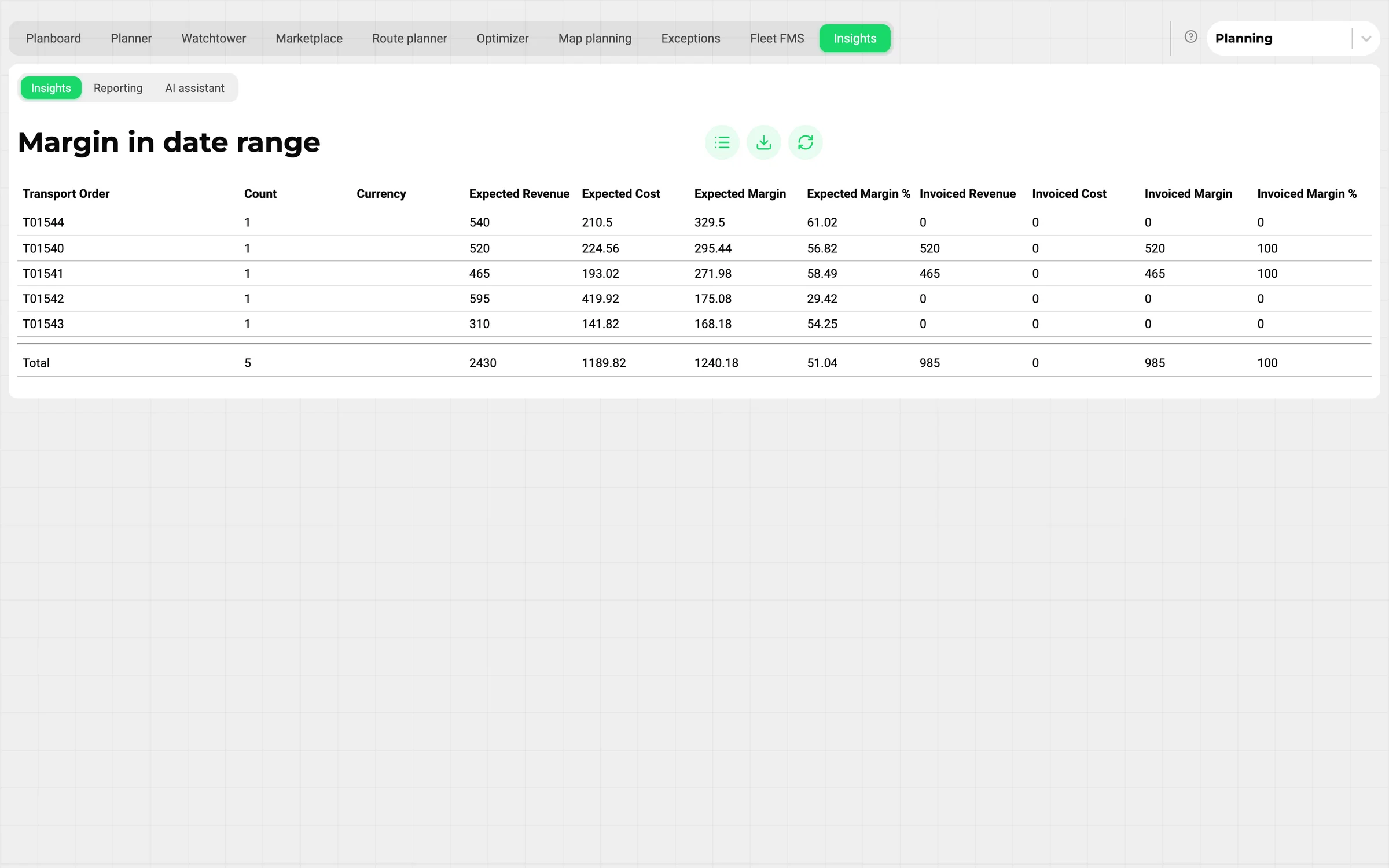
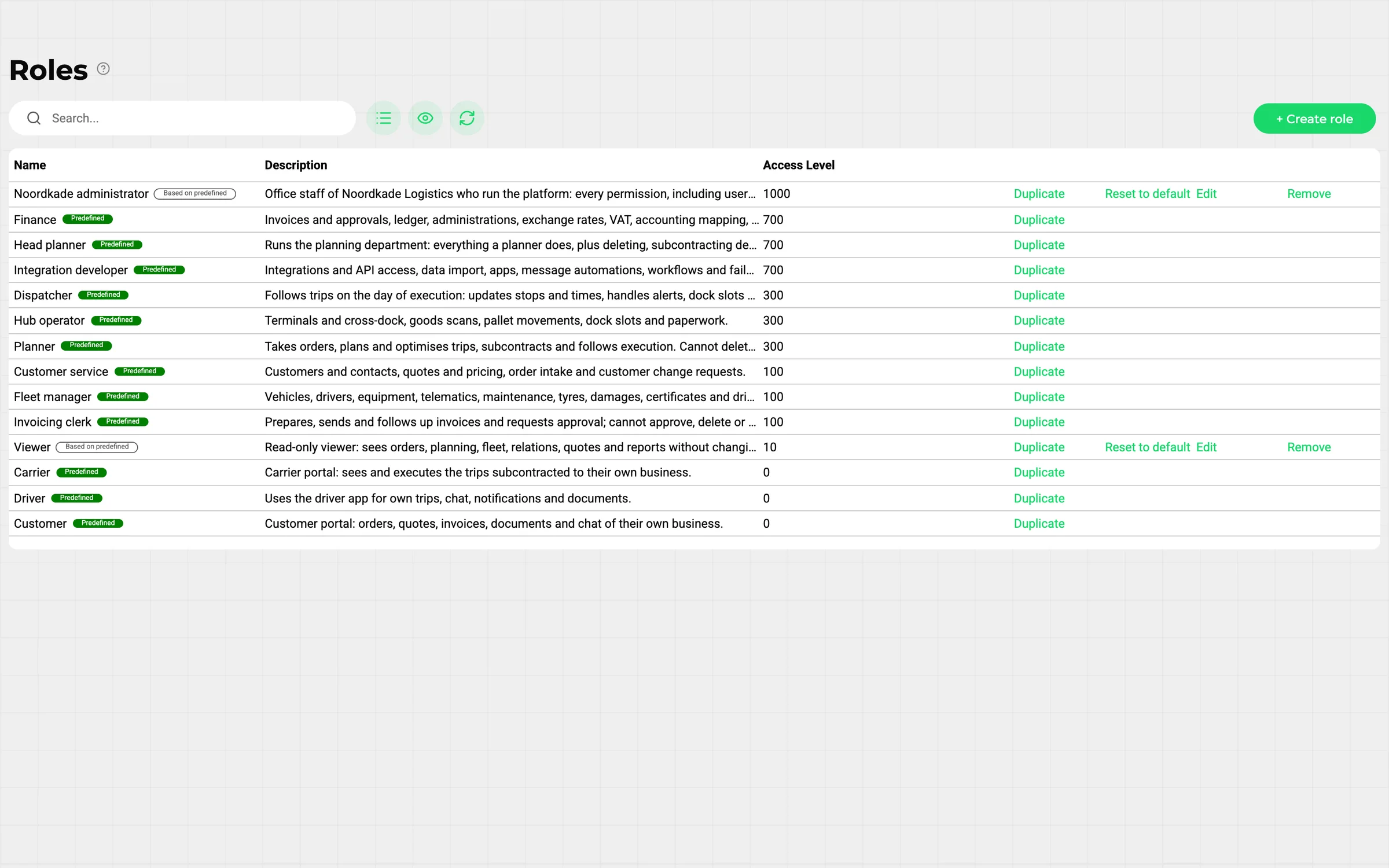
From AI trip optimisation to white-label deployments, Transportial gives you every tool to run a modern logistics operation or build the next logistics product.
Transportial is a multimodal transport management system (TMS) built on the OTM5 open data standard. Transport companies, freight forwarders, logistics service providers, couriers and shippers use it to take an order from booking to invoice, with planning, tracking, driver communication, documents and billing in one cloud platform and a free Starter plan.
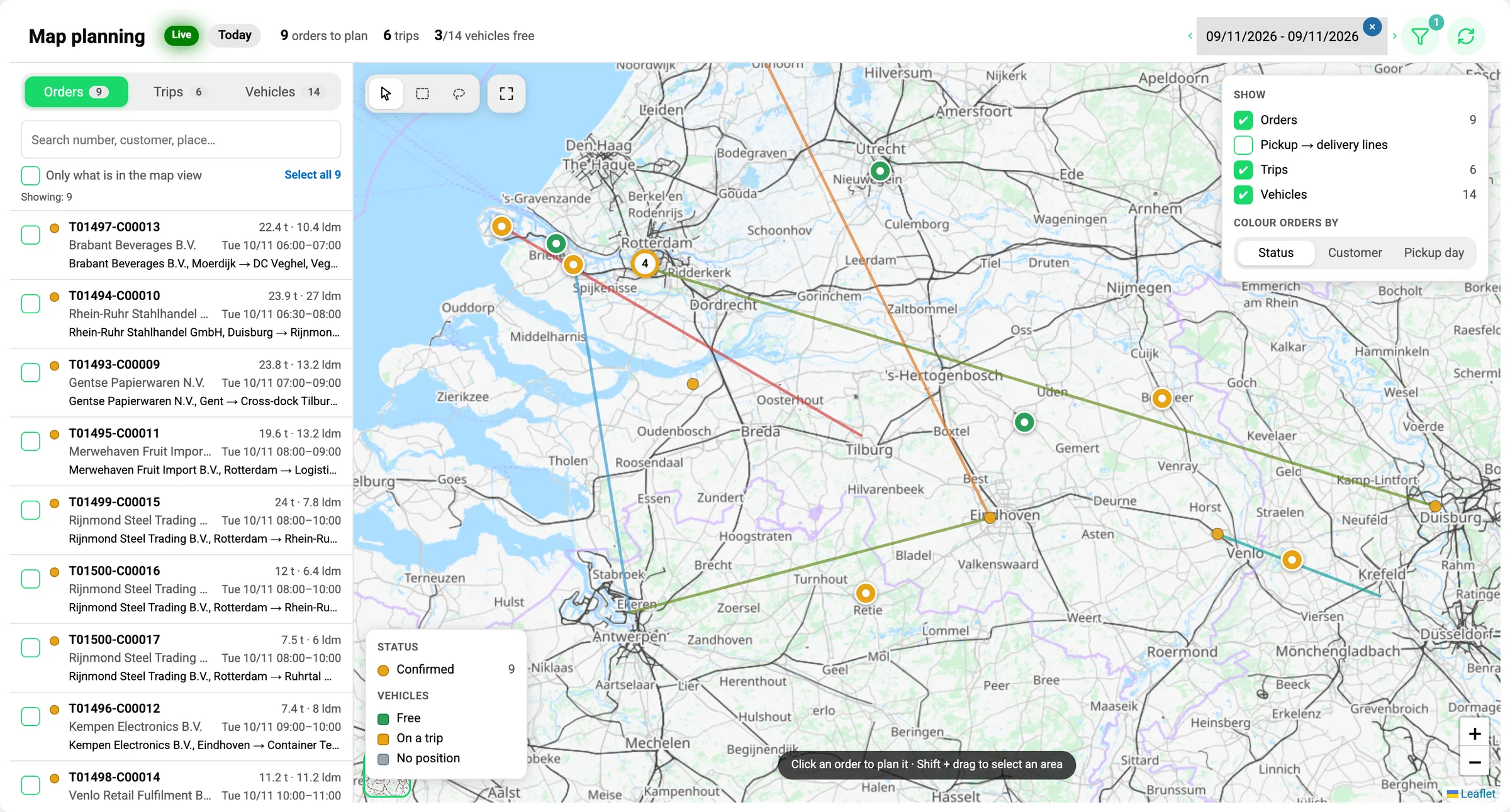
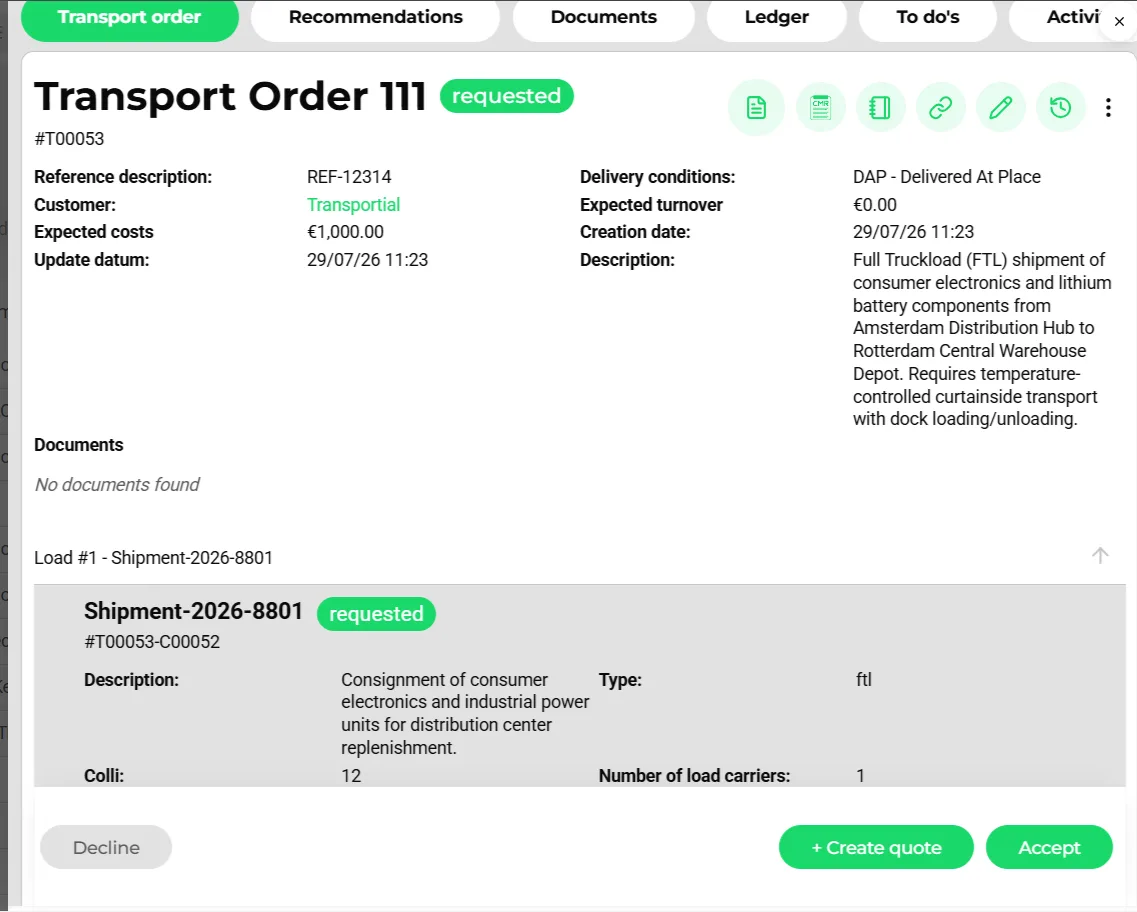
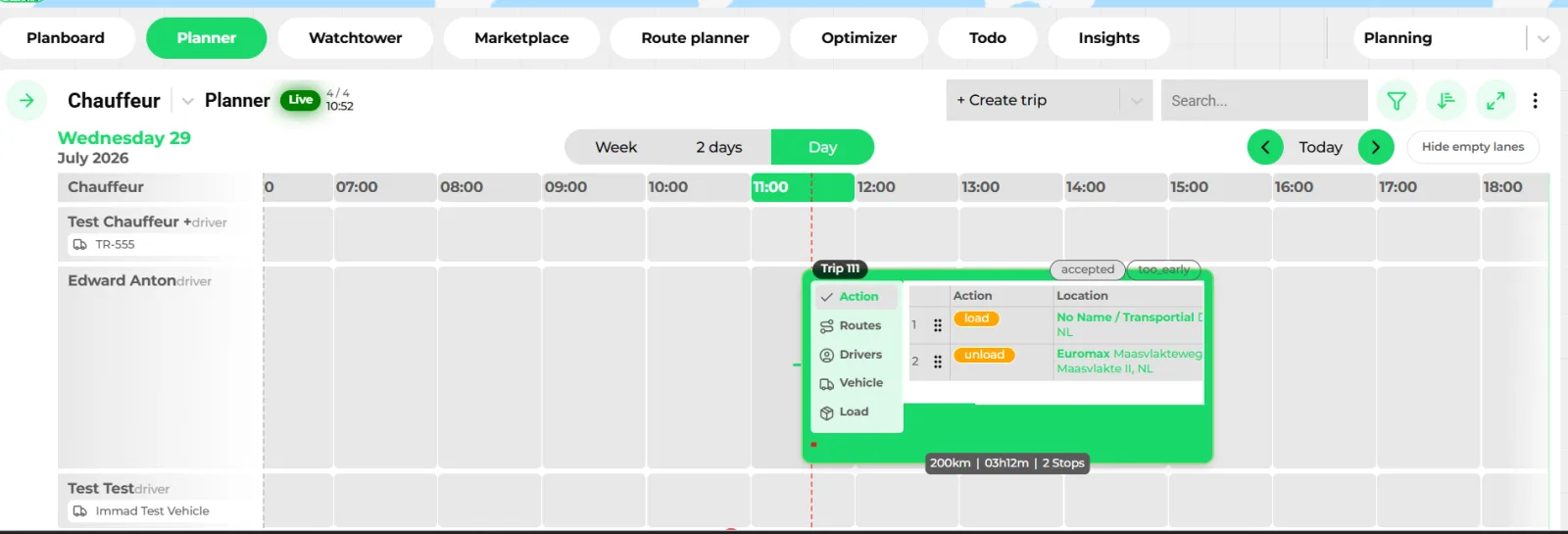
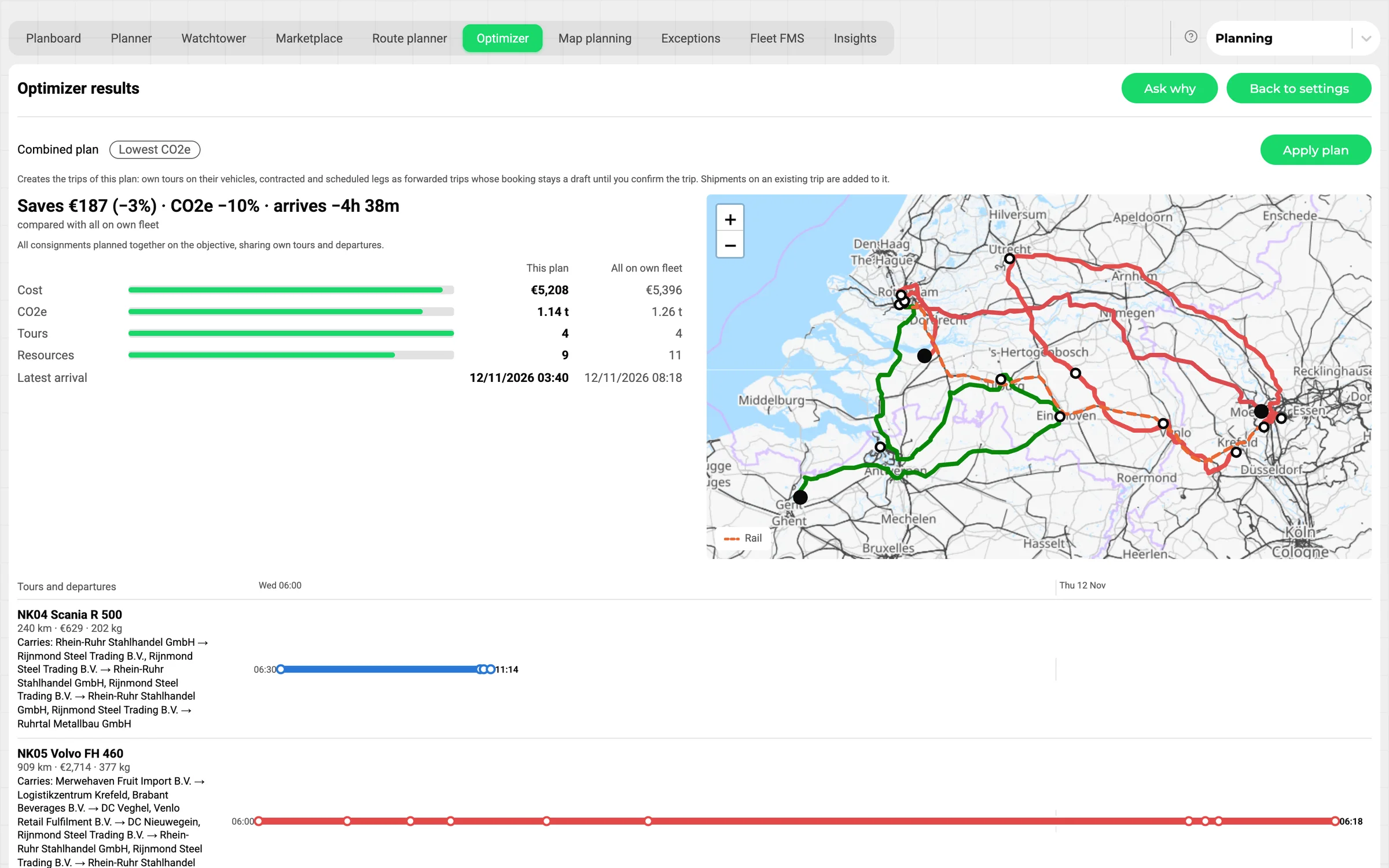
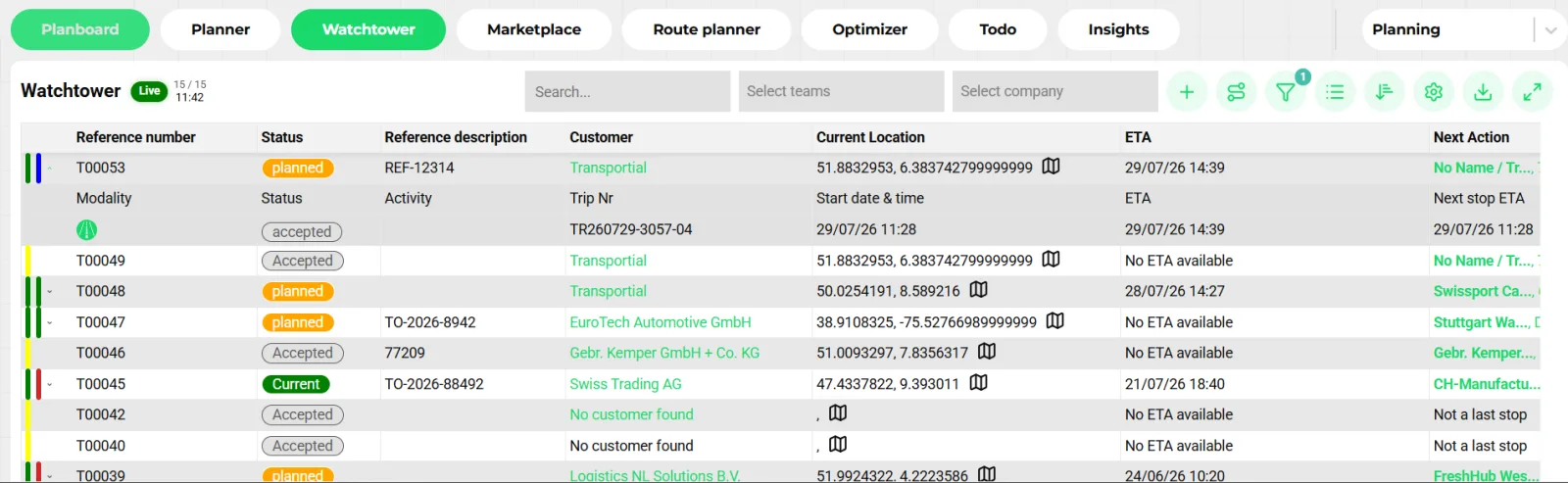
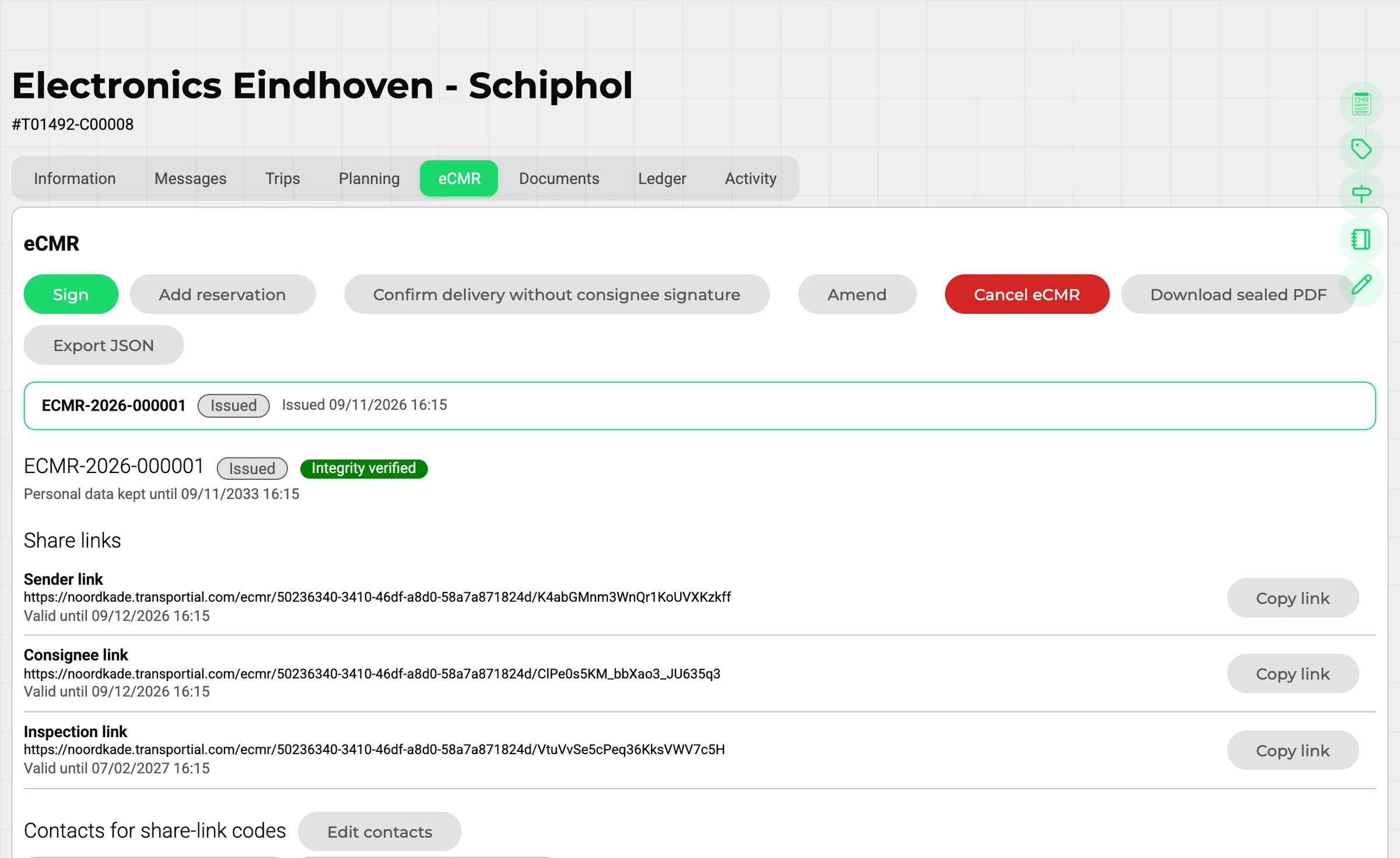
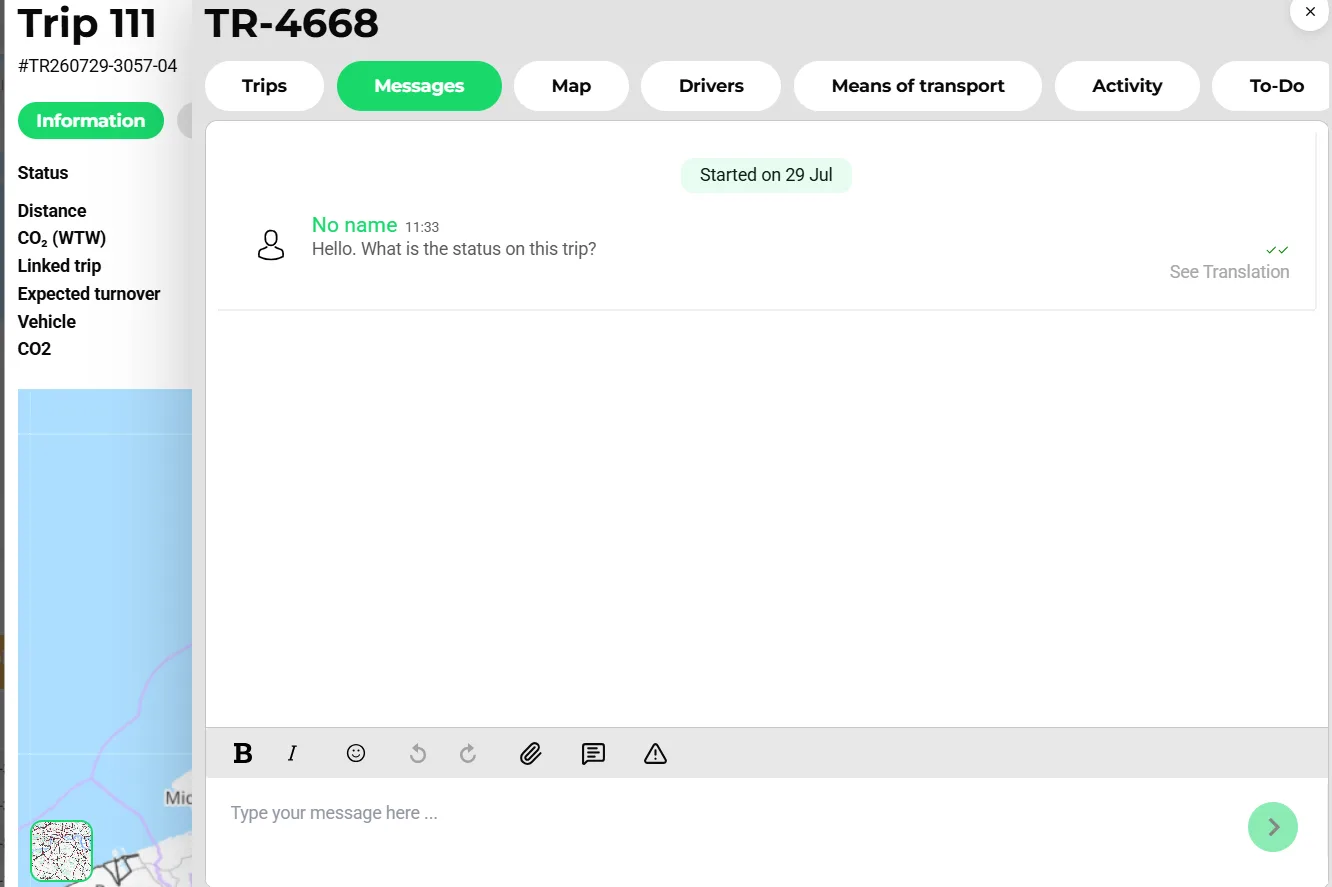
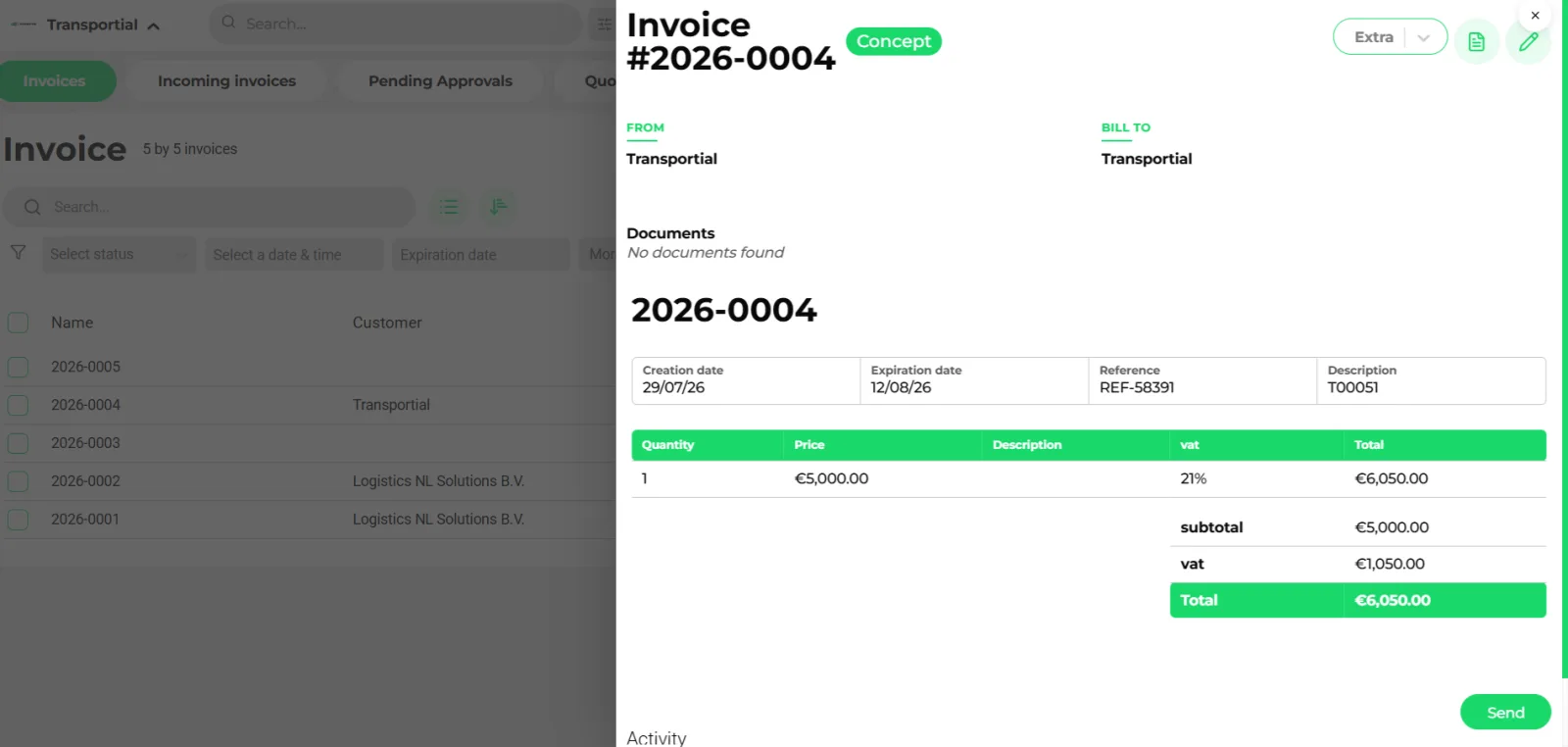
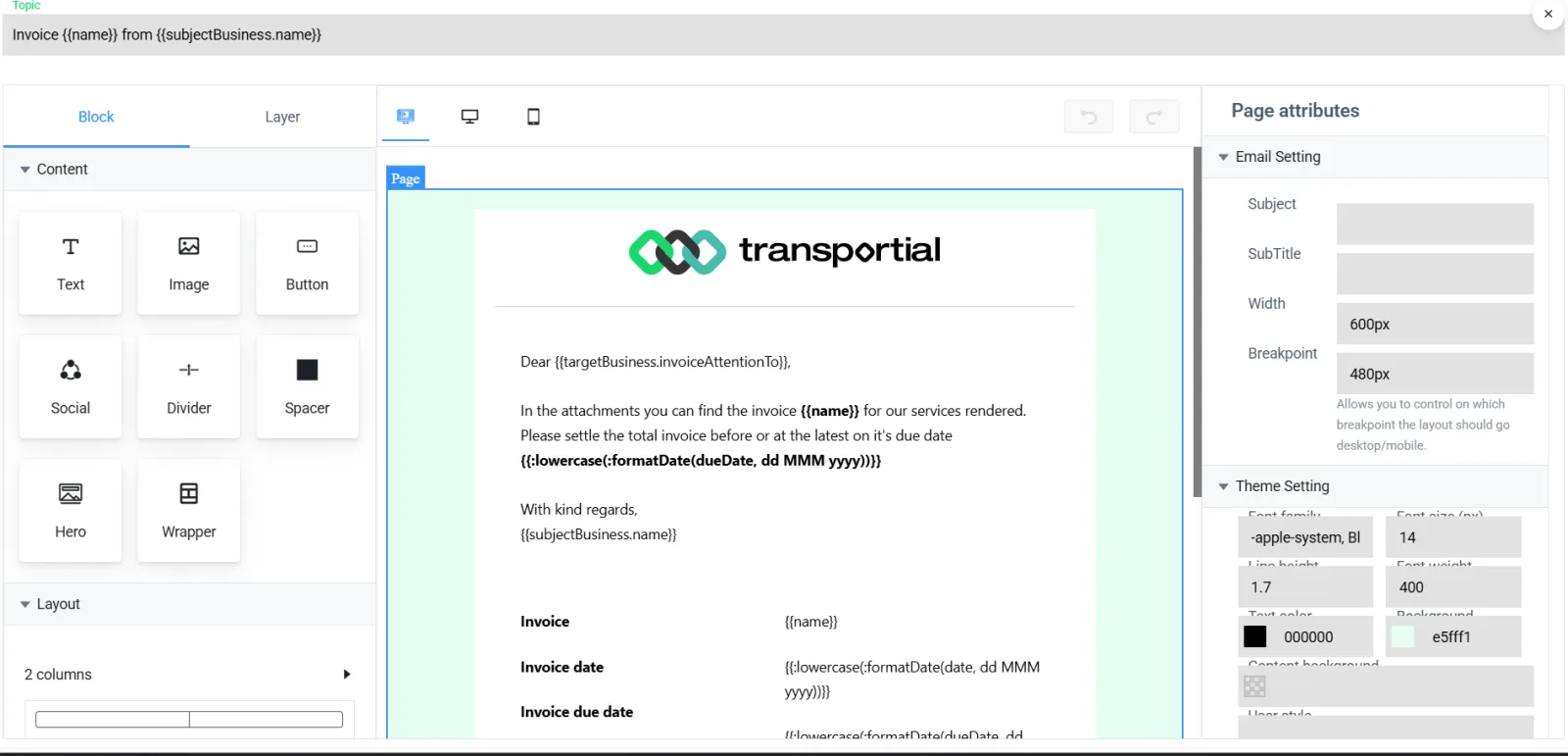
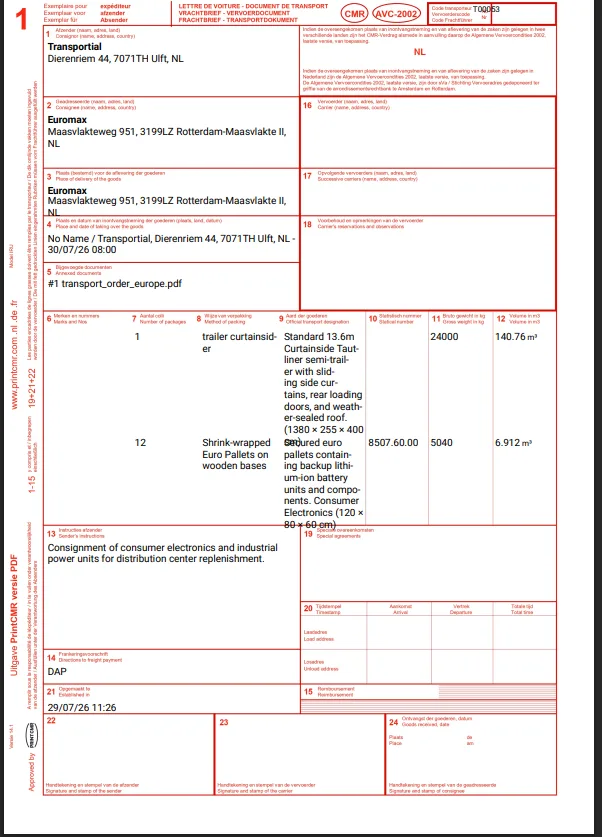
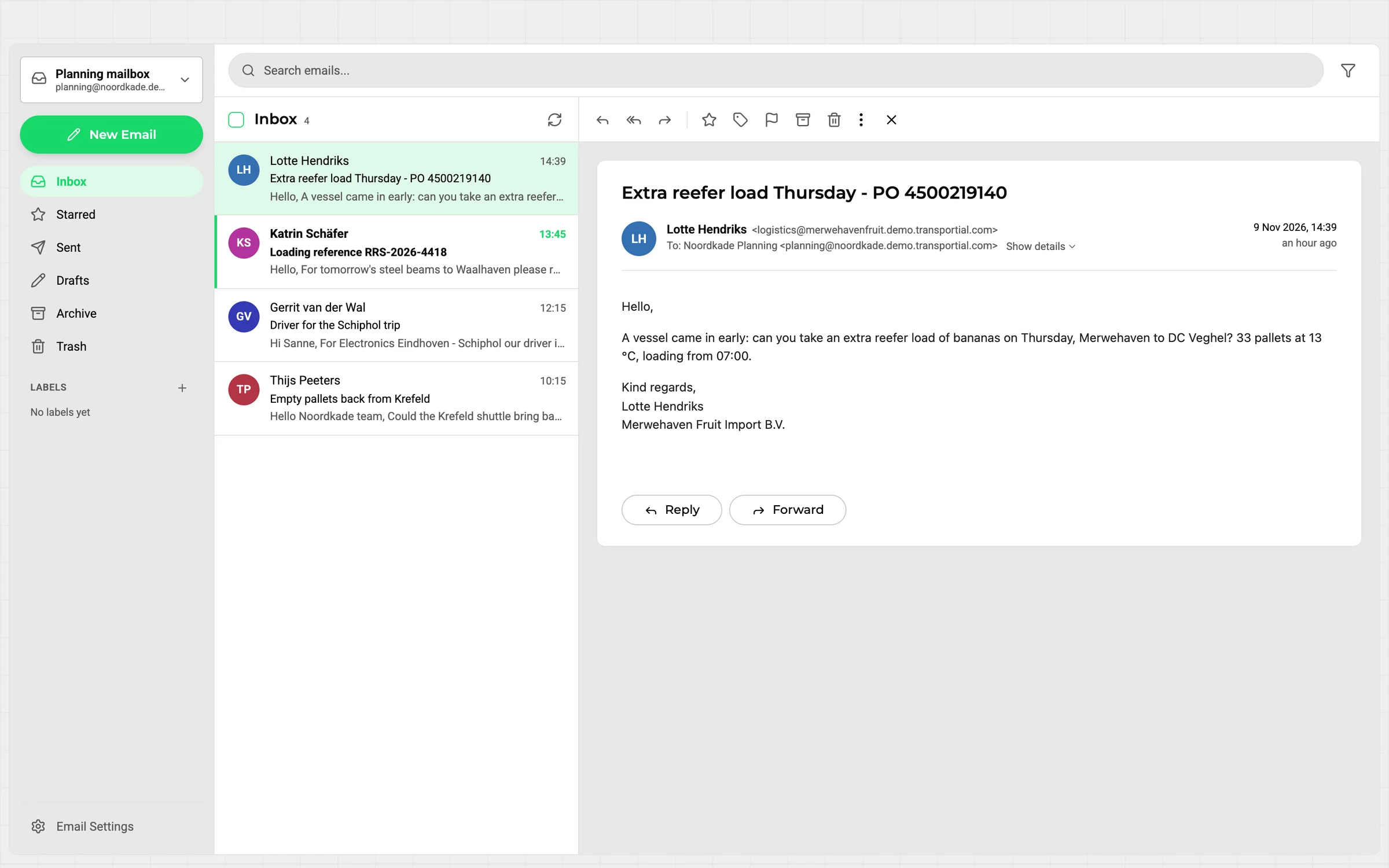
Transportial B.V. has built its transport management system in Ulft, the Netherlands, since 2021. The platform keeps one record per transport order and follows it through every stage: order entry by hand, email, API or EDI; a drag-and-drop plan board and a built-in vehicle routing solver that respects driving and rest times; live vehicle positions from the OpenMove driver app or connected telematics; digital transport documents and proof of delivery; and invoices generated from the work actually done. Orders, trips and events are structured according to OTM5, the open standard for exchanging transport data, so customers, carriers and subcontractors can connect without bespoke mappings. A REST API with OpenAPI documentation, webhooks and ready-made integrations link Transportial to telematics providers, accounting software and messaging channels. Customers follow their shipments in a branded portal or through tracking links that need no login, and message automations keep them informed at every milestone.
Which transport modes does Transportial support?
Transportial supports four transport modes: road, sea, air and rail. Road trips are routed with a truck-grade engine that respects vehicle height, weight and hazardous goods restrictions, while sea, air and rail legs are booked and tracked inside the same transport order, so a multimodal shipment stays one record from collection to delivery.
Transportial treats multimodal transport as one transport order with several legs instead of a separate system per mode. Road routing runs on GraphHopper with a truck profile that accounts for height, weight, axle load, tunnels and hazardous goods, and operators that need enterprise tour planning can connect PTV. Sea legs are routed over the MARNET maritime network for realistic port-to-port distances and transit times, air freight legs carry flight details and air waybill references, and rail legs carry wagon numbers and terminals. Because every leg shares the same consignment, documents, tracking and invoice, a forwarder sees the whole door-to-door chain in one place. That matters because no single mode carries everything: road transport accounted for 25.7% of all EU freight tonne-kilometres in 2024, with the rest moved by sea, rail, inland waterway and air (Eurostat, 2026).
How is Transportial priced?
Transportial uses transaction-based pricing instead of per-user licences. The Starter plan is free with no end date and includes 20 consignments, 10 trips, 10 invoices and 3 internal users every month. Above that, each consignment, trip or invoice costs from €0.50, falling to €0.01 as monthly volume grows, with no monthly minimum.
Transportial prices its transport management system per transaction rather than per seat, so the cost follows the freight a company actually moves. Consignments, trips and invoices are pooled into one combined monthly total, which means mixing activities still unlocks the cheaper volume tiers. The rate starts at €0.50 per transaction for the first 500 a month and steps down through €0.40, €0.30, €0.20, €0.10 and €0.05 to €0.01 above 200,000 transactions. The free Starter plan has no time limit and covers 20 consignments, 10 trips, 10 invoices, 3 internal users, one vehicle per type, 3 integrations and 5 automations each month, enough for a small operator to run real work before paying anything. Units above the free allowance are billed at the standard rate without overage penalties. There is no monthly minimum and no lock-in, and enterprise or white-label deployments are priced separately on request.